For a decade, the cabin market chased size. Listings bragged about square footage, multiple living rooms, and bedrooms in numbers no one really needed. Then, quietly, the trend reversed. Some of the most-booked rentals on the major platforms in the last two years have been micro cabins — single-room or near-single-room cabins of two hundred to four hundred square feet, often built by small operators on small plots in beautiful places. The economics work, the aesthetics work, and most surprisingly, the experience works.
The puzzle for first-time micro-cabin guests is the same one most people have about tiny houses generally: how do you not feel cramped? The answer, after a few stays, is that a well-designed micro cabin doesn't try to fit a normal house into a small box. It's designed around the idea that you'll be outside most of the time and inside mostly to sleep, cook simply, and stay warm. That single shift in assumption changes the entire experience.
What makes a micro cabin work
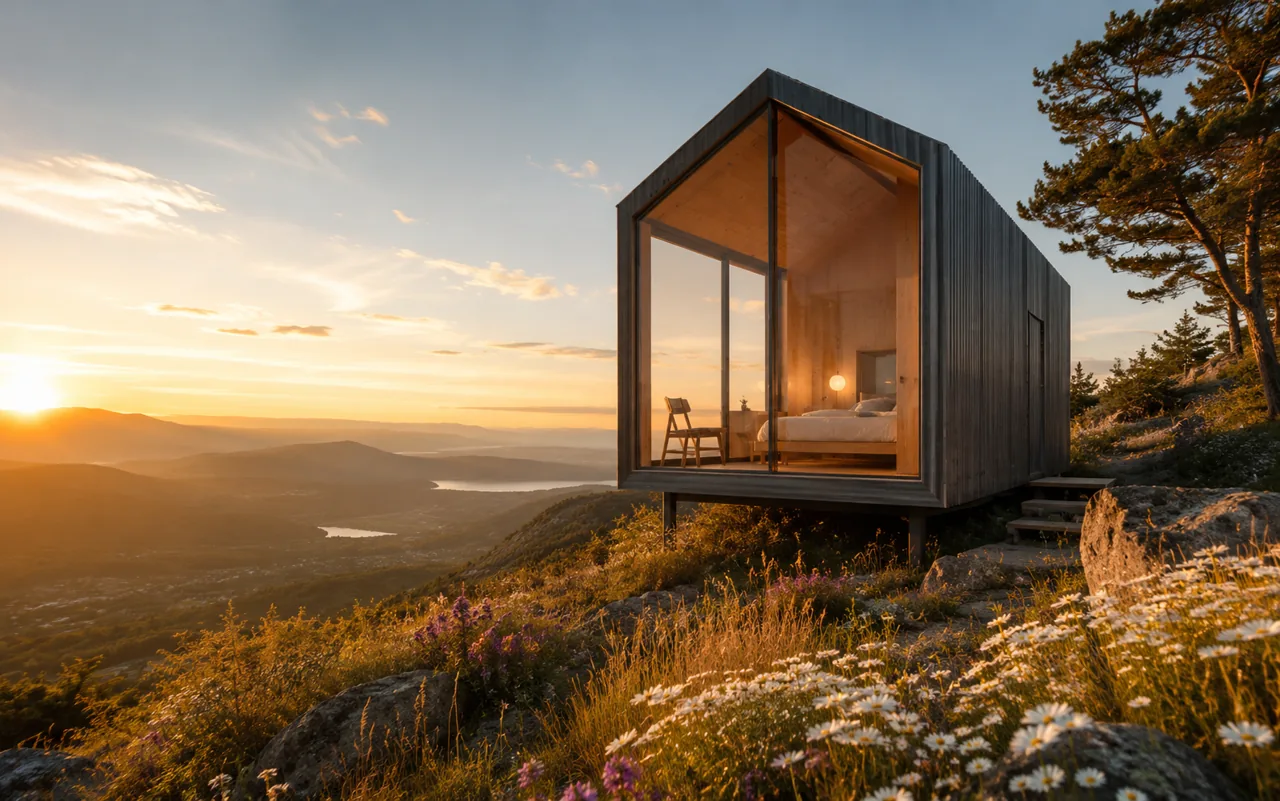
The micro cabins that genuinely succeed share a small number of design moves. A single large window, usually facing the best view, that effectively turns the wall into a piece of furniture. A bed positioned so you can see out of that window from the pillow. A small kitchen with two burners, a kettle, and enough counter space to make breakfast — not enough for a dinner party. A wood stove or efficient heater that warms the whole cabin in fifteen minutes. A covered outdoor area, often as large as the cabin itself, that functions as the actual living room in any weather other than rain. Get those right and three hundred square feet feels generous.
Why guests keep coming back
The thing micro-cabin guests almost always mention in reviews is how quickly the trip slows down. There's nowhere to spread out, so you don't. You bring one book, one outfit per day, one meal plan. The cabin can be tidied in ninety seconds. There's no separate living room to relocate to, no upstairs to escape to. You're forced into the porch, the woods, the small loop walk, the morning coffee outside. People come back to micro cabins because they accidentally produce the slower, simpler trip everyone says they want but rarely manages.
The downsides, honestly
A micro cabin is the wrong choice for some trips. Anything longer than three or four nights for two people usually starts to feel tight unless the outdoor area is genuinely usable. They're almost never the right choice for groups of more than two — even with a sleeping loft, three or four people in a single small room is a stress test for any relationship. Wet-weather days are harder than in a normal cabin, because there's no second room to retreat to. And micro cabins with no outdoor cover should be avoided entirely if you're going somewhere with unpredictable rain.
The other practical point is storage. Micro cabins assume you've packed light. Two large suitcases for two people will overwhelm a three-hundred-square-foot space within twenty minutes of arrival. If you're considering a micro cabin, treat it like a backpacking trip with a bigger bed.
How to spot a well-designed one
The listings that look like architecture-magazine photoshoots are sometimes the best and sometimes the worst. The best micro cabins are designed by people who've actually stayed in tiny spaces and know what fails — they've made the windows huge, the heating fast, the storage clever, the bathroom slightly larger than seems necessary. The worst are designed by people who've only seen tiny houses in photographs, with showers you can't turn around in and kitchens that don't quite have anywhere to put a kettle. Reviews are the tell. If multiple guests mention "actually felt spacious," the design is doing its job. If multiple guests mention "smaller than expected" without saying it nicely, walk away.
The bigger trend
The interesting thing about the micro cabin boom is that it's quietly pulling the broader cabin market toward smaller, more thoughtful design. Hosts who were building four-bedroom rentals five years ago are now adding a single-room "studio cabin" on the same property. Resorts are adding glamping pods and micro cabin clusters alongside their main lodges. The trend isn't really about tininess — it's about the realisation that for two people on a short trip, what you want from a cabin is the view, the porch, the bed, the wood stove, and the sense that everything else is optional.
Done well, two hundred square feet in the right place feels less like deprivation and more like permission. There's nothing to maintain, nothing to organise, nothing to do except notice where you are.