The headline price of a cabin is almost never the real price. You see a number on a listing — eighty pounds a night, say, or a hundred and forty dollars — and your brain quietly multiplies it by the number of nights and arrives at a figure that, by the time you're at checkout, looks nothing like the total. The cleaning fee, the service fee, the booking fee, the firewood fee, the local lodging tax. By the time you've added them up, the daily rate has often risen by thirty to fifty percent.
This isn't necessarily a scam. Cabins genuinely cost more to clean than hotel rooms, and the booking platforms genuinely add charges on top. The problem is that the costs are spread across the booking process in a way that makes them hard to compare. A cabin listed at ninety dollars a night with an enormous cleaning fee can easily end up more expensive than one listed at a hundred and twenty with no extras. Reading the breakdown carefully is half the skill of booking a cabin well.
The cleaning fee, and why it's so high
Cleaning fees on cabin rentals can be anywhere from forty dollars to three hundred dollars per stay, and they're charged once whether you're there for two nights or two weeks. This obviously punishes short stays — a cabin with a two-hundred-dollar cleaning fee makes very little economic sense for a single night. The fee usually covers a deep clean between guests, including laundering all linens, restocking consumables, and sometimes a basic restock of firewood and coffee. Some hosts charge more than they need to as a margin, others price honestly. You can usually tell which is which by comparing the cleaning fee to similar cabins in the same area.
Service fees and the platform tax
The booking platforms — Airbnb, Vrbo, Booking.com, and the rest — all add a service fee on top of whatever the host is charging. This is typically somewhere between ten and twenty percent of the subtotal, and it's the reason direct bookings (where you find the host's own website and book through them) are sometimes meaningfully cheaper. The downside is you lose the platform's dispute resolution, which for first-time visitors to a property is usually worth the fee. For repeat bookings to a host you trust, going direct can save real money.
Local lodging taxes
Lodging taxes vary wildly by state, county, and municipality, and they're almost never included in the headline price. In some U.S. mountain towns the combined tax can hit fifteen percent. In rural areas it can be under five. The platforms calculate and add these automatically at checkout, but it's worth knowing they're coming so the final bill doesn't surprise you. If you're comparing two cabins in different counties, the tax differential alone can swing the decision.
The fees that feel like nonsense
Some cabin rentals charge for things that feel borderline cheeky — the so-called resort fee, the firewood-bundle surcharge, the hot-tub-use fee, the late-checkout fee. These have crept across from the hotel industry, where they exist mainly to make the headline rate look more competitive than it is, and they're worth scanning the listing for before you book. A fifty-dollar firewood fee on a cabin you specifically chose for the wood stove is a different proposition from a cabin where firewood is included.
The on-trip costs people forget
Beyond the booking itself, there are predictable on-trip costs that get budgeted into hotel stays but mysteriously forgotten for cabin trips. Groceries are the big one — cabins don't come with meals, and a week of self-catering for a family of four can easily run several hundred dollars if you're not paying attention. Petrol is the other: rural cabins tend to be further from supermarkets and trailheads than they appear on the map, and the driving adds up. Build a rough budget line for groceries, petrol, firewood top-ups, and one nice meal out, and you'll come home without the financial hangover.
A sensible rule of thumb
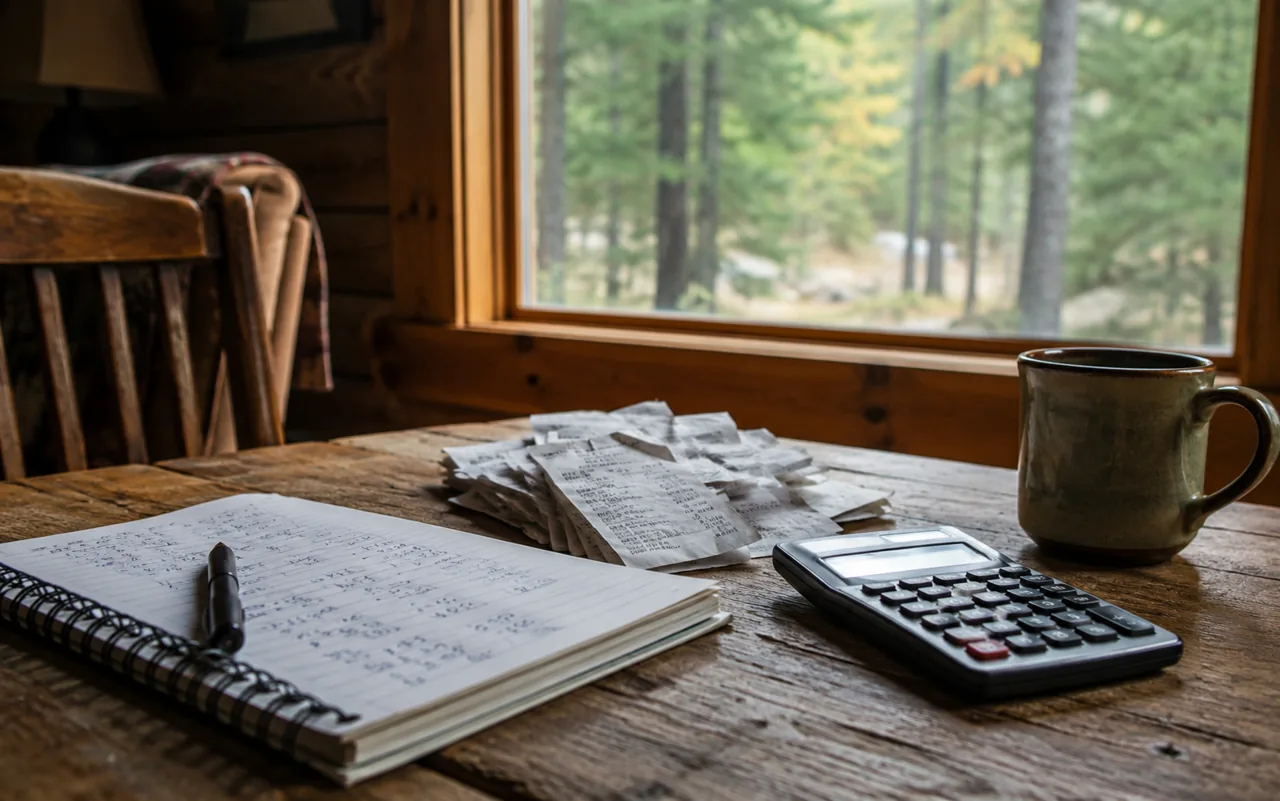
When budgeting for a cabin trip, take the nightly rate, multiply by the number of nights, then add roughly forty percent for fees, taxes, and on-trip costs. That's usually within ten percent of what the trip actually costs. If you book the same cabin a few times, you'll start to know its specific patterns and can budget more precisely. But the forty-percent rule will keep you from booking a trip that quietly turns out to be a quarter more expensive than the listing implied.