For years, our cabin trips started with a car so full we couldn't see out the back window. We'd haul board games we never opened, kitchen gadgets the cabin already had, three jackets each for a two-night trip, and at least one inflatable thing that never got inflated. Coming home was always the same: half the bags untouched, half the food uneaten, and the quiet realisation that we'd spent forty minutes packing things we didn't use.
The fix was a real checklist — short, repeatable, and based on what we actually reach for, not what we imagine we might. We've used roughly the same version of it for three years, and it's cut our packing time in half without leaving us short of anything that mattered.
Start with what the cabin already has
Read the rental listing properly before you pack a single thing. Most cabins come with cookware, plates, basic spices, towels, linens, a coffee maker of some flavour, and a first-aid kit. Some have boots, board games, books, and stacks of firewood. Packing duplicates is the single biggest source of wasted boot space. If the listing doesn't say, message the host — they'll usually tell you within an hour, and that one question can save you carrying half a kitchen across two states.
The clothing rule: two of everything, one warmer thing
For a two-to-four-night cabin trip, you don't need a different outfit for each day. Two pairs of trousers, two t-shirts or long-sleeves, two pairs of warm socks, two pairs of underwear per day, and one warm layer over the top of all of it. Add a waterproof outer shell if there's any chance of rain. That's it. Cabin trips reward the same wardrobe rotation that camping does — comfortable, slightly worn, suitable for being seen by no one you're trying to impress.
The food layer: plan three meals, improvise the rest
The mistake we used to make was packing food for every possible scenario. Now we pre-plan three anchor meals — usually Friday dinner, Saturday dinner, and one big breakfast — and pack to those exact recipes. Everything else is grazing food: bread, cheese, fruit, a few decent snacks, coffee, and one bottle of something nice. We always come home with less waste, less stress, and significantly less fridge Tetris.
The "small stuff" bag
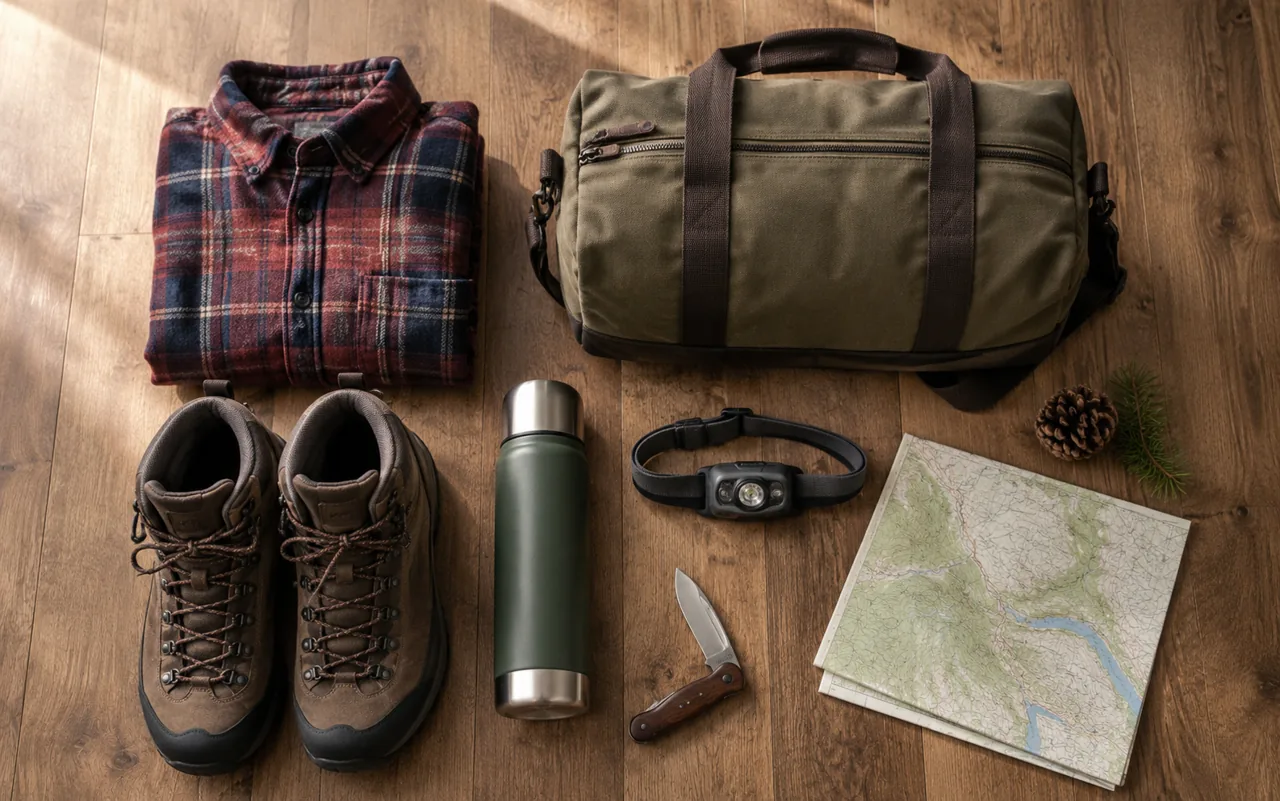
The single most useful thing we've added to our packing routine is a small canvas bag containing the things we always forget. It lives by the door year-round and gets refilled the day after we get home. Inside: a head torch with fresh batteries, a small first-aid pack, a lighter, a multi-tool, a roll of gaffer tape, a phone charger and cable, a pen, a deck of cards, and a refillable water bottle each. It weighs almost nothing and removes about thirty mental items from the pre-trip checklist.
The honest extras
A few things aren't strictly essential but earn their place every single trip: a paperback book per adult (you'll actually read it at a cabin in a way you won't at home), a pair of comfortable indoor slip-ons (cabin floors are colder than you remember), a microfibre towel for unexpected swims, and a small speaker if you like music in the evenings. Everything else is overpacking dressed up as preparation.
The checklist itself
- Clothing layers (two-of-everything rule)
- Waterproof outer shell + warm mid layer
- Walking shoes + indoor slip-ons
- Toiletries bag (kept permanently packed)
- Three planned meals + grazing food + coffee
- Small stuff bag (torch, first aid, lighter, charger, multi-tool)
- One book and one quiet card game
- Refillable water bottles
- Phone, wallet, keys, booking confirmation screenshot
Packing light is mostly a confidence trick. The more you trust the list, the less you carry. After three or four trips on the same checklist, you stop worrying about what you forgot — because there's nothing on the list that matters enough to forget.